
Applications · By industry
Food & beverage. Gas for every season.
Flavour profiling, residue screening, nutrition labels and water QC all run on GC, LC-MS, ICP and combustion analysers — and peak season is exactly when a cylinder lead time hurts most.
What this industry needs
Flavour and fragrance profiling, residual solvents, contaminant and pesticide screening, trace metals and compositional QC run on GC, GC-MS, LC-MS and ICP, often against a seasonal production calendar that peaks just when a cylinder order is least convenient.
How it works
From the sample or the process to the result, and the gas used at each step.
Incoming lots are screened for pesticides, mycotoxins and solvents by LC-MS and GC-MS.
GC-MS and headspace GC profile aromas and check flavour consistency batch to batch.
Protein by Dumas, energy by bomb calorimetry and minerals by ICP feed the nutrition label.
TOC and metals in process water and cleaning rinses close the loop.
Where Leman fits
The Leman product lines this industry uses, and what each one does.
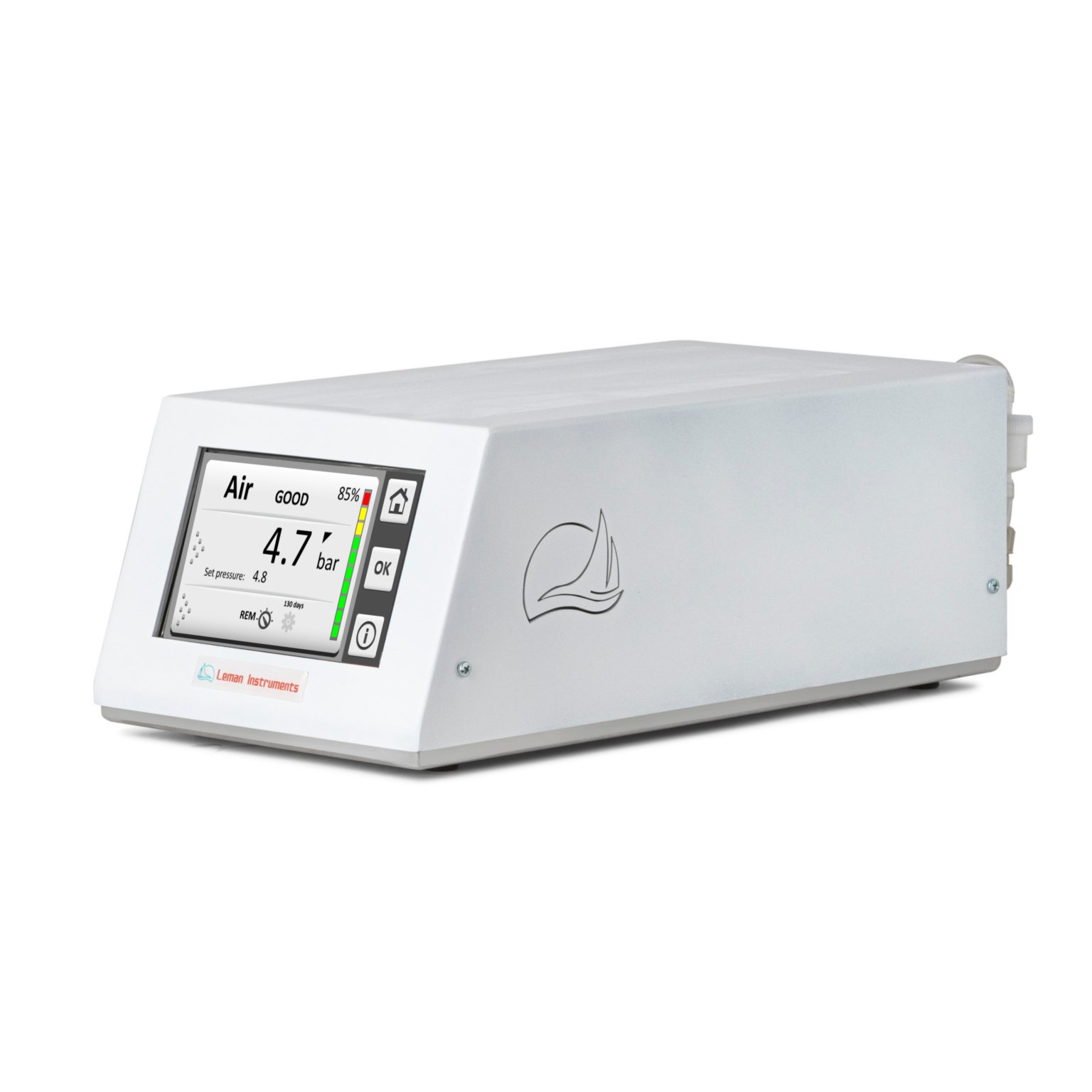 Lead product lineAEROZero air, AERO50 to AERO70Air
Zero air for flame detection and combustion analysis in compositional and flavour GC.
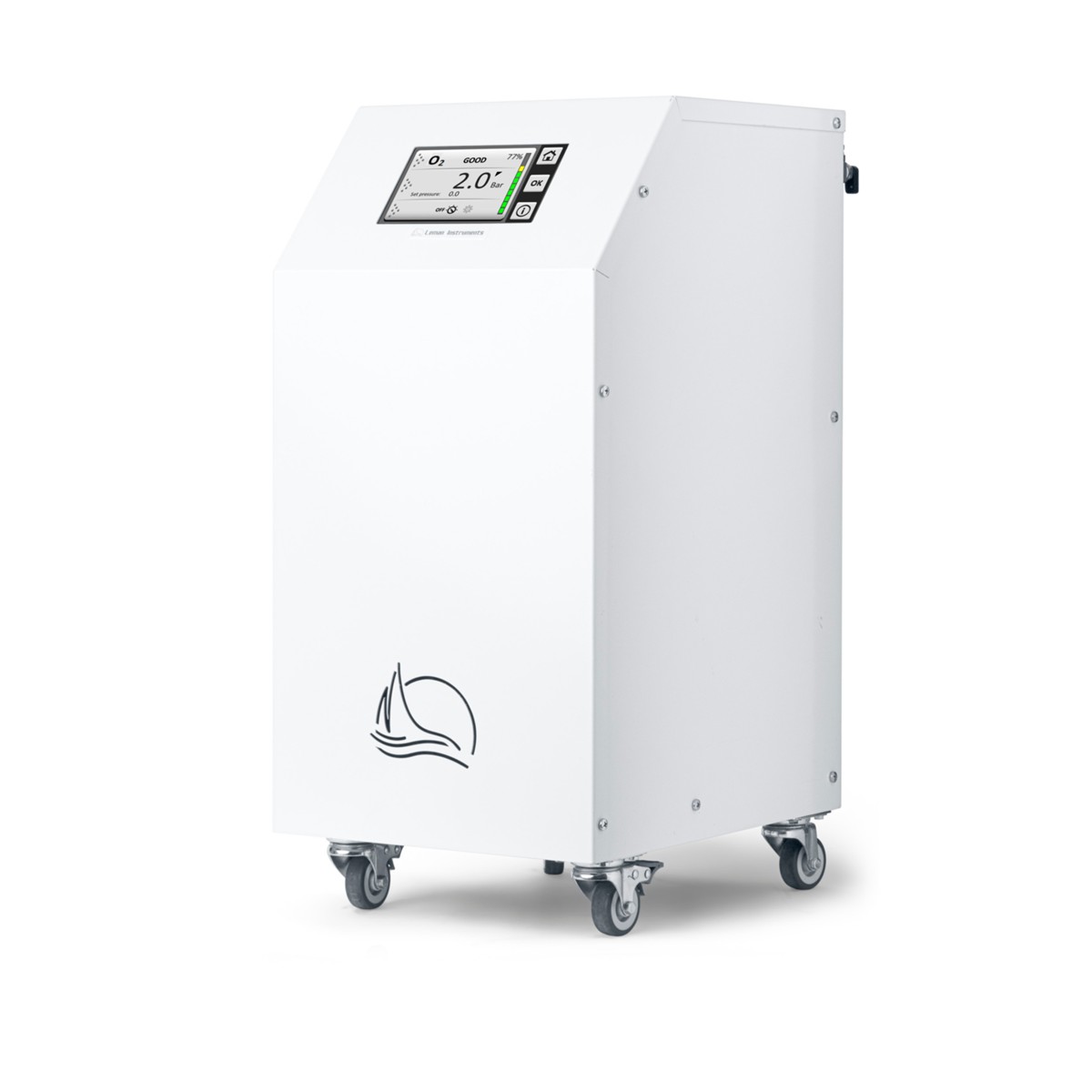 OXYOxygen 99.999 %O2
Oxygen for elemental and calorimetric testing: calorie and nutrition values run on the same oxygen bomb calorimetry as fuel testing.
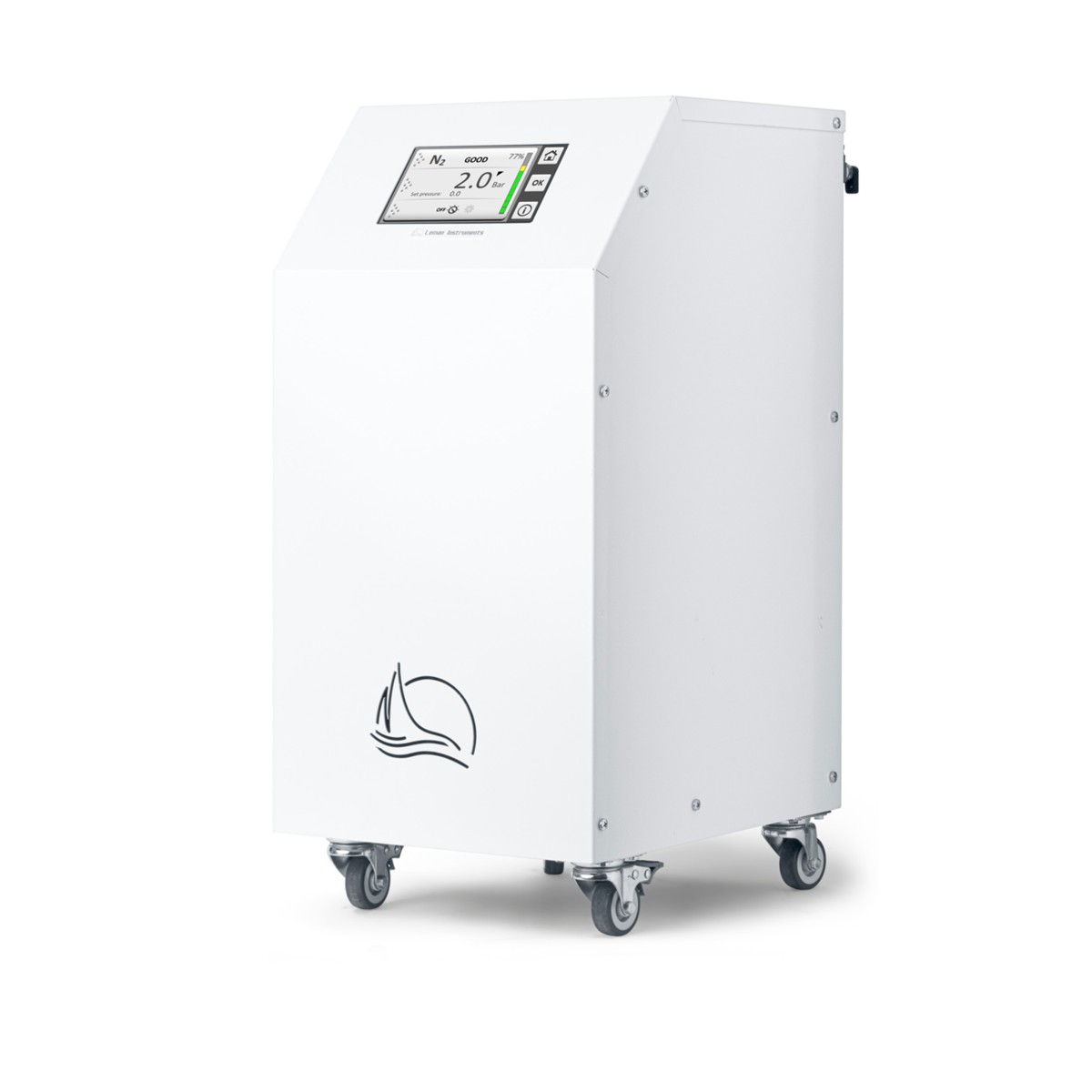 NITRONitrogen, 99 % to 99.99995 %N2
LC-MS residue and contaminant screening, ICP trace-metal work, Dumas protein analysers.
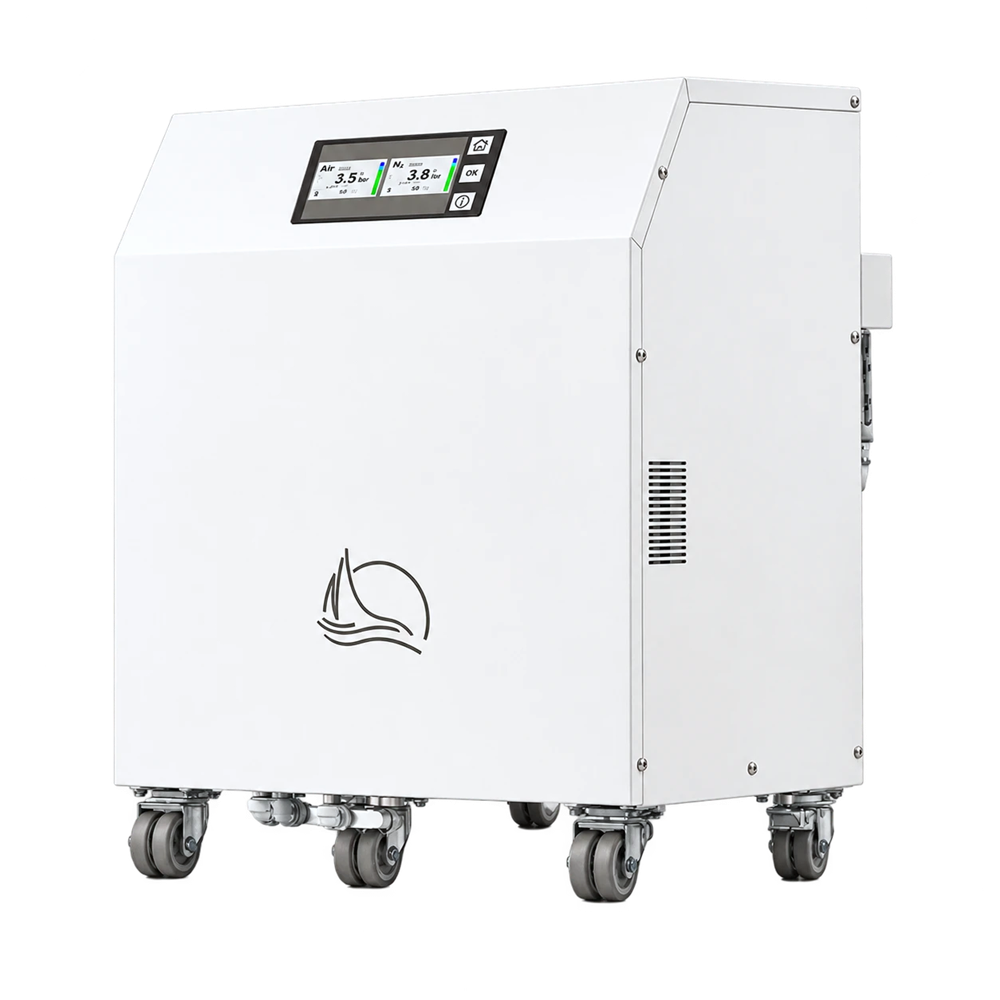 SOLO / DUO / TRIO LCMSNitrogen and zero air for LC-MSN2Air
SOLO, DUO and TRIO LCMS for triple-quadrupole residue panels.
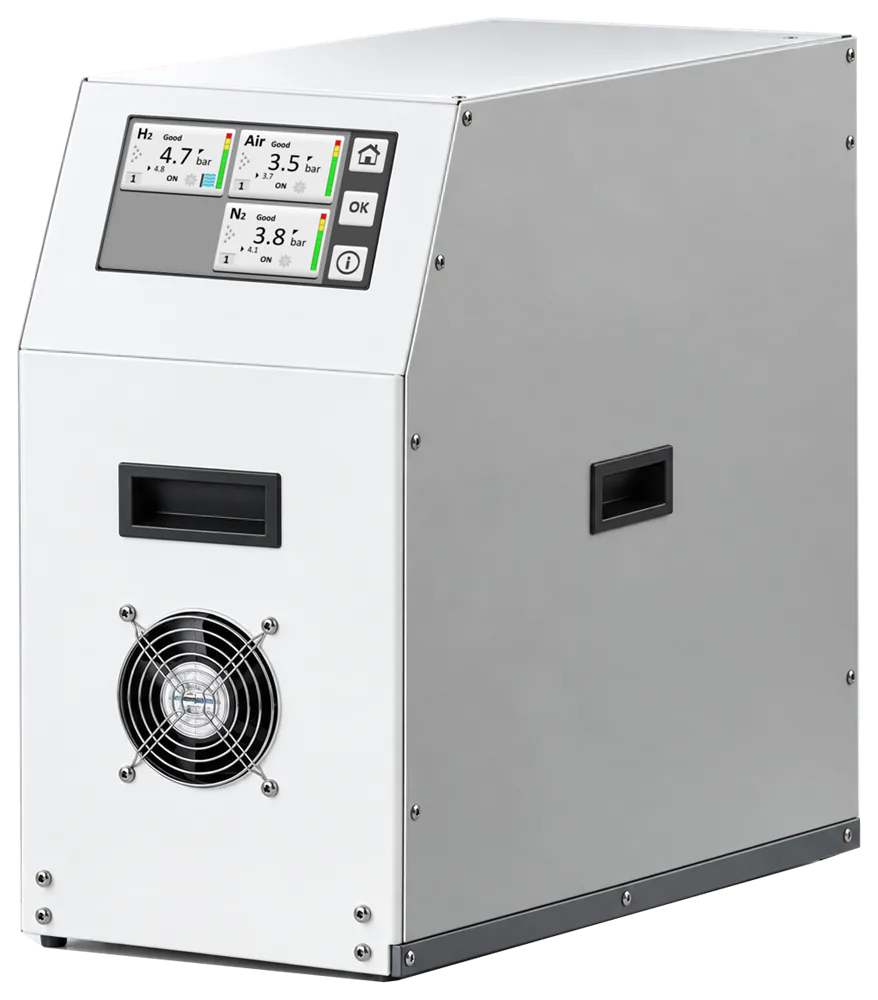 GCSTATION NEO / NANO TOWERH₂ + N₂ + zero air for GCH2N2Air
The complete gas supply for a QC lab running compositional and flavour GC all day.
In depth
Residues at very low levels
Pesticide and contaminant panels run on triple-quadrupole LC-MS with hundreds of compounds per injection. The source needs a steady flow of dry nitrogen all day. SOLO LCMS makes it from compressed air, so a long overnight sequence never stops on an empty cylinder.
Calories come from oxygen
Energy values on a label are measured in a bomb calorimeter: the sample burns in pure oxygen under pressure and the heat released is measured. Each test needs its own oxygen charge. An OXY50 L fills the bomb from the lab bench, with oxygen made from air.
On the bench
Application by application: the equipment you will find, the gas it needs and the Leman generator that makes it.
| Application | Equipment | Gas it needs | Leman generator |
|---|---|---|---|
| Flavour and fragrance GC-MS | GC-MS with headspace or SPME | H₂ carrier, zero air | HYDRO50 LAERO50 L |
| Residue and contaminant LC-MS | Triple-quadrupole LC-MS | N₂ nebuliser, desolvation and curtain gas | SOLO LCMS |
| Trace metals by ICP-OES | Radial and dual-view ICP-OES | N₂ optics purge | NITRO ICP |
| Calorific value and nutrition | Oxygen bomb calorimeters | O₂ bomb charge, one per sample | OXY50 L |
| Water and process TOC | Laboratory and online TOC analysers | CO₂-free carrier gas | AERO TOC LWSA |
Instruments we know
From our compatibility lists: each family with its gases and the Leman generators that run it.
GC, GC-MS and headspace
Leman generatorsGCSTATION NEO · NANO TOWER · HYDRO70 L · NANO N2
120 instruments in our compatibility listsLC-MS residue screening
Leman generatorsSOLO LCMS · DUO LCMS · NITRO50 L · NITRO30 LS2
85 instruments in our compatibility listsTrace metals
Protein, TOC and nutrition
Leman generatorsOXY50 L · AERO TOC L · NITRO50 L · NANO COMP
49 instruments in our compatibility lists- 2 × GC · Laboratory GC
- 1 × GC · GC-MS
- 1 × LC-MS · Triple quadrupole
- 1 × ICP · ICP-OES
- 1 × Elemental · Nitrogen / protein (Dumas)
- 1 × TOC · Combustion TOC
Questions we hear
Straight answers to what labs ask us first.
Our volumes are too seasonal to justify a generator.
A cylinder contract is sized for peak demand all year; a generator simply follows the flow your method draws. Peak season is when it pays most.
Can one generator feed several instruments?
Yes. The Lab Gas Planner adds up your instruments and proposes one generator per instrument or a central unit per gas.
Other industries
Your methods and procedures set the gas specifications; a Leman engineer confirms flows, pressures and purities before quotation.