
Applications · By industry
Semiconductor & electronics. Purity at parts per billion.
MOCVD epitaxy, ultrapure-water TOC, FTIR process-gas analysis, deposition R&D and deuterium anneal: high-purity hydrogen, nitrogen, zero air and deuterium, made where they are used.
What this industry needs
MOCVD epitaxy for GaN and SiC power devices draws hydrogen carrier gas continuously, in tens of litres per minute, for the life of the tool.
Ultrapure-water TOC, FTIR process-gas analysis and deposition and etch R&D complete the picture, all at ppb-level purity.
How it works
From the sample or the process to the result, and the gas used at each step.
MOCVD reactors grow GaN, SiC and GaAs layers with hydrogen or nitrogen as carrier gas.
Deposition, etch and anneal steps run under controlled gas at ppb purity.
Ultrapure water is monitored for TOC continuously; process gases are checked by FTIR.
Analytical labs and R&D lines need clean, dry nitrogen and hydrogen at the tool.
Where Leman fits
The Leman product lines this industry uses, and what each one does.
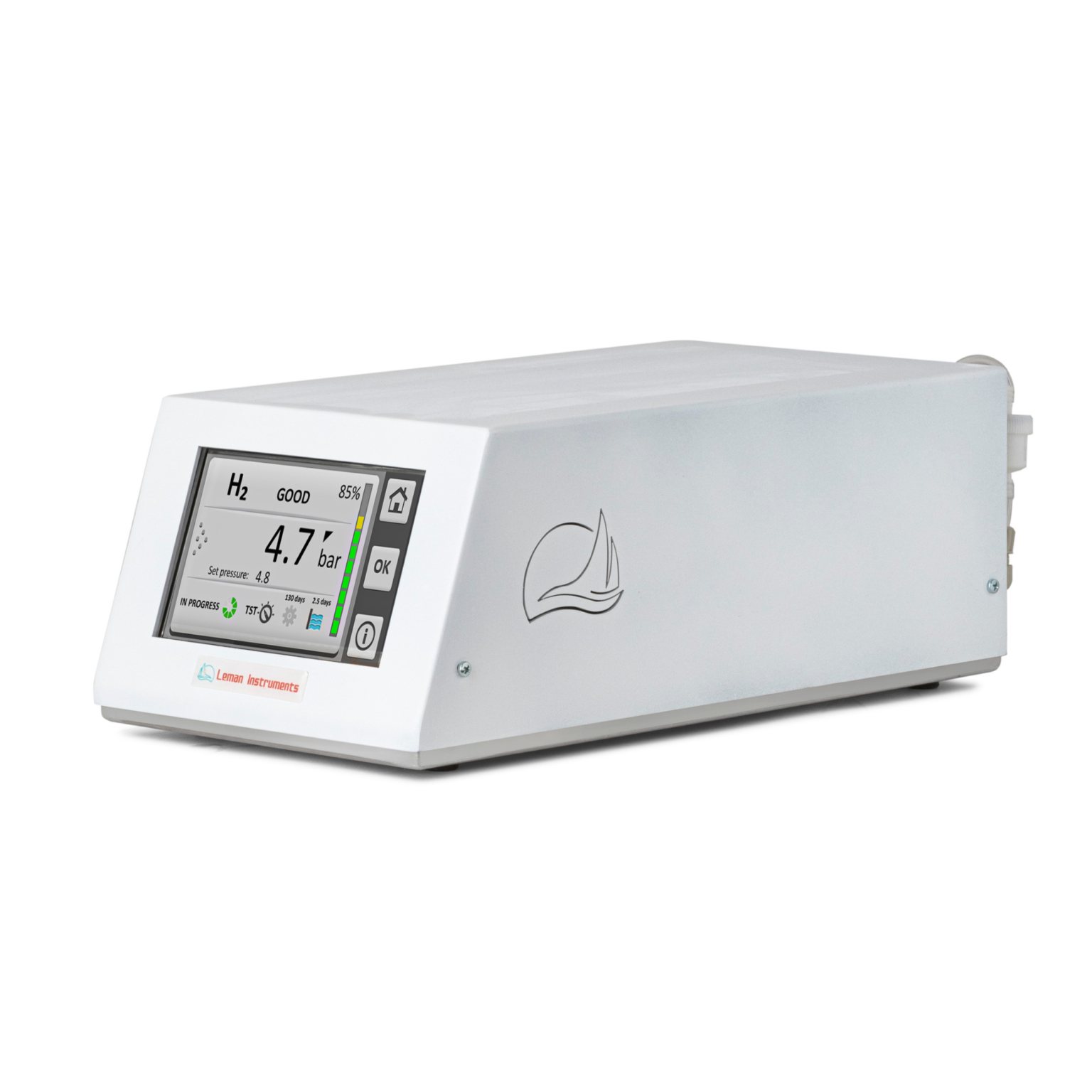 Lead product lineHYDROHydrogen, three PEM purity gradesH2
Hydrogen is one of MOCVD's two standard carrier gases, transporting TMGa, TMIn and TMAl into the reactor; the higher-flow HYDRO models are sized for it.
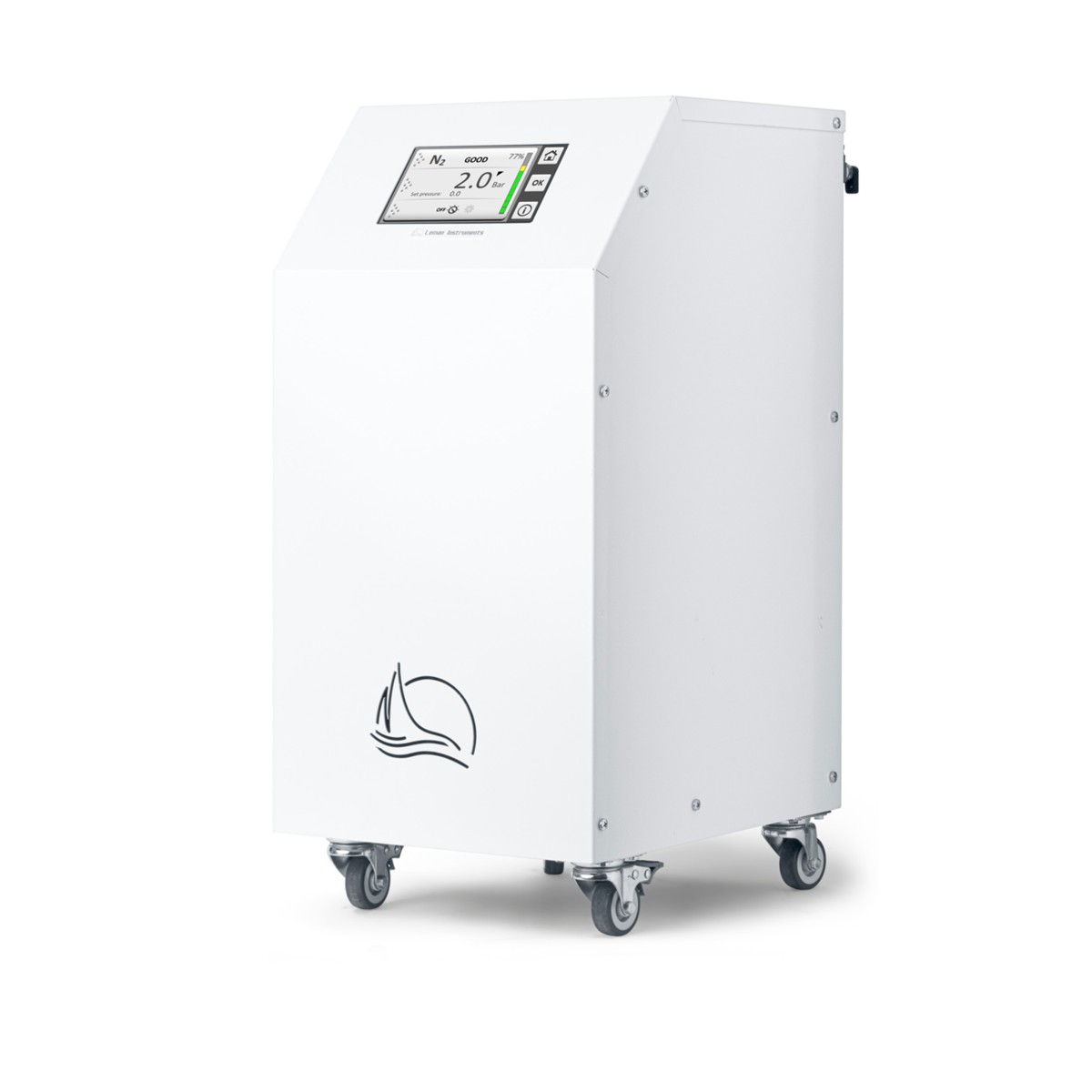 NITRONitrogen, 99 % to 99.99995 %N2
NITRO50 and NITRO65 for optics purging, baseline protection and deposition and etch R&D at ppb-level control.
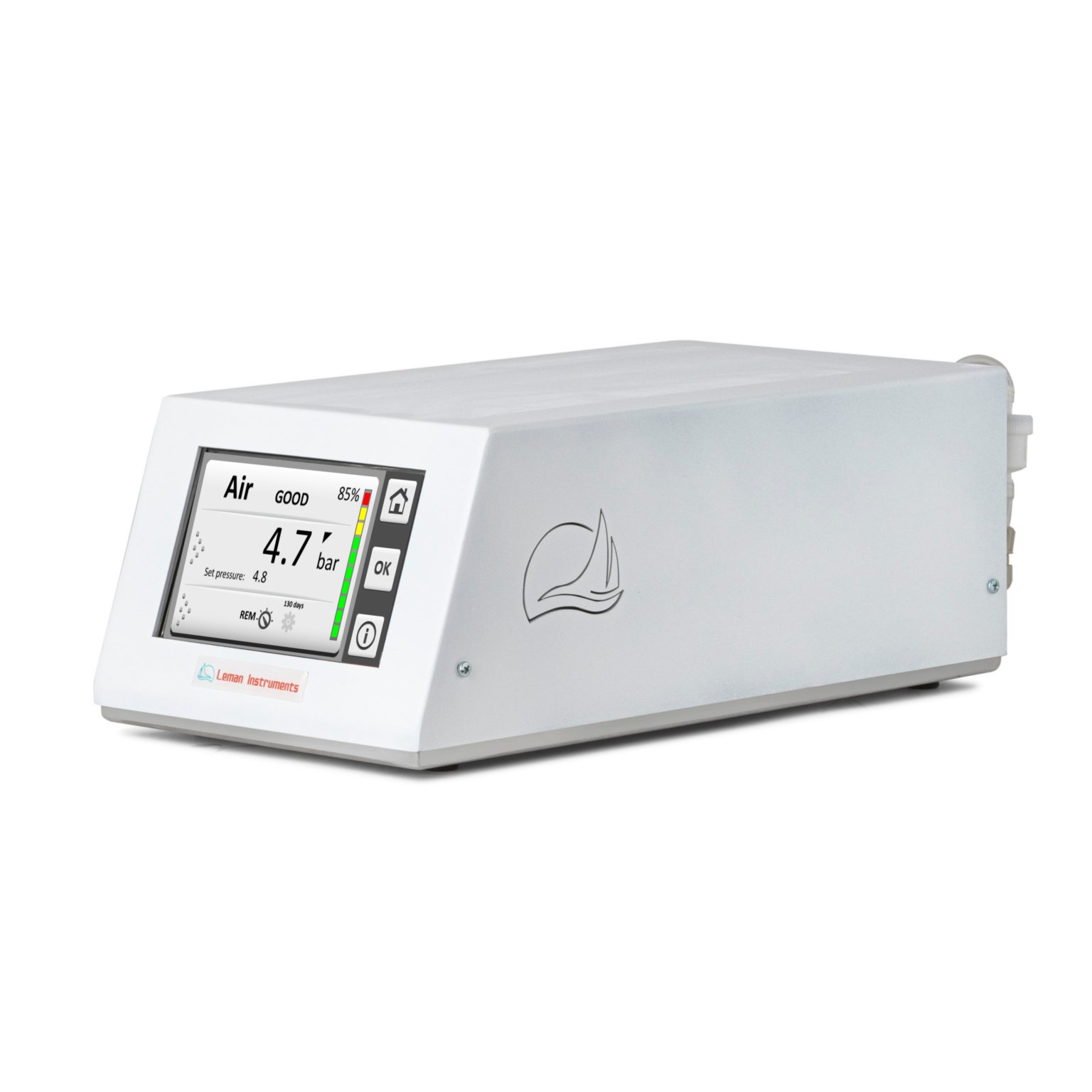 AEROZero air, AERO50 to AERO70Air
CO₂- and moisture-free air for FTIR process-gas analysis and ultrapure-water TOC monitoring.
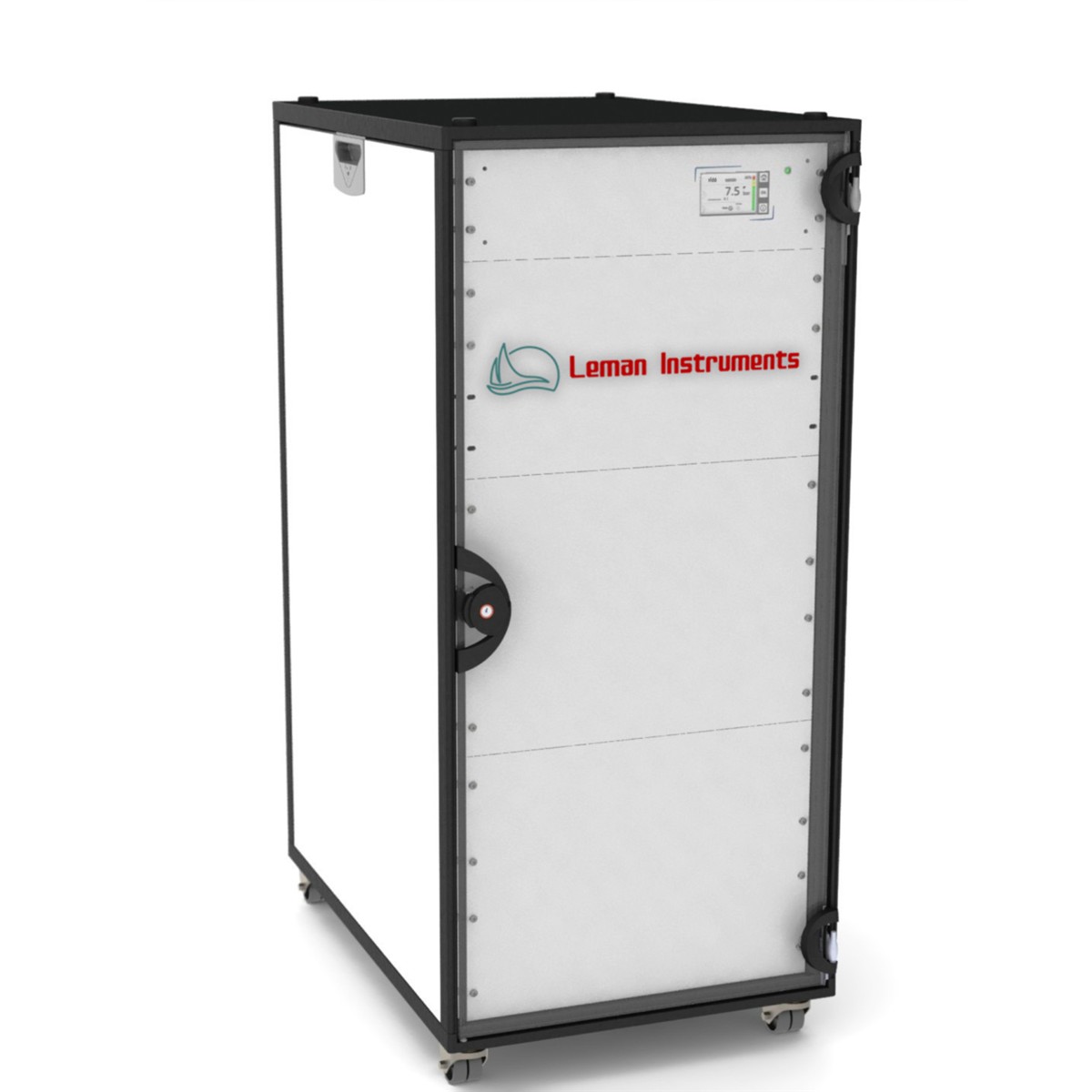 DIHYDRODeuterium from heavy waterD2
Deuterium for forming-gas anneal at the silicon–oxide interface, the premium alternative to hydrogen anneal.
In depth
Hydrogen carrier gas in MOCVD
In MOCVD, the carrier gas sweeps metal-organic precursors such as trimethylgallium into the reactor. Hydrogen is one of the two standard carriers, and a reactor draws it continuously, in tens of litres per minute. The high-flow HYDRO models make it from water at the tool, with purity that does not depend on a cylinder farm.
Why deuterium anneal
After gate oxidation, a forming-gas anneal passivates defects at the silicon–oxide interface with hydrogen. Using deuterium instead makes that passivation more robust against hot-carrier degradation, because the silicon–deuterium bond is harder to break. A DIHYDRO generator makes the D₂ on site from heavy water.
On the bench
Application by application: the equipment you will find, the gas it needs and the Leman generator that makes it.
| Application | Equipment | Gas it needs | Leman generator |
|---|---|---|---|
| MOCVD epitaxy (GaN, SiC, GaAs) | MOCVD reactors | H₂ carrier, tens of L/min, continuous | HYDRO65 LS2HYDRO70 LS2 |
| Ultrapure-water TOC | Online and laboratory TOC analysers | CO₂-free carrier gas | AERO TOC L |
| FTIR process-gas analysis | FTIR gas analysers | CO₂- and moisture-free purge | AERO FTIR LNITRO ICP |
| Deposition, etch and metrology R&D | Fab process tools | N₂ or H₂ at ppb control | NITRO65 LHYDRO65 L |
| Forming-gas anneal | Standard anneal furnaces | D₂ forming gas | DIHYDRO50 LS2 |
Instruments we know
From our compatibility lists: each family with its gases and the Leman generators that run it.
Ultrapure-water TOC
Leman generatorsAERO TOC L · OXY50 L · NITRO50 L · NANO COMP
35 instruments in our compatibility listsFTIR and gas analysis
Leman generatorsAERO FTIR L · NITRO50 L
18 instruments in our compatibility listsTrace metals in chemicals
Electron microscopy and glove boxes
Leman generatorsNANO N2 · NITRO50 LS
9 instruments in our compatibility listsQuestions we hear
Straight answers to what labs ask us first.
Our purity requirements are beyond what a generator can give.
NITRO65 is specified at 99.99995 % with a −70 °C dew point, and the higher-flow HYDRO models are sized for continuous MOCVD draw. Tell us the actual specification before ruling a generator out.
Is deuterium anneal possible without D₂ cylinders?
Yes: DIHYDRO makes D₂ from heavy water on site, at the flow the furnace needs.
Other industries
Your methods and procedures set the gas specifications; a Leman engineer confirms flows, pressures and purities before quotation.