
Applications · By industry
Nuclear power & research. Hydrogen and deuterium chemistry.
Plant chemistry labs verify dissolved hydrogen and oxygen every shift; heavy-water reactors and national labs add deuterium chemistry of their own. Leman supplies the lab gases and the deuterium.
What this industry needs
Hydrogen water chemistry suppresses the oxygen and peroxide that radiolysis creates in reactor water, and the plant chemistry lab verifies it shift by shift.
Heavy-water (D₂O) reactors and national research labs add isotope standards and deuterated materials.
How it works
From the sample or the process to the result, and the gas used at each step.
Dissolved hydrogen is kept on target to suppress oxidising species from radiolysis.
Dissolved gases and impurities are measured shift by shift.
D₂O moderators and coolants are monitored and kept isotopically pure.
National labs use deuterated materials for detectors and physics.
Where Leman fits
The Leman product lines this industry uses, and what each one does.
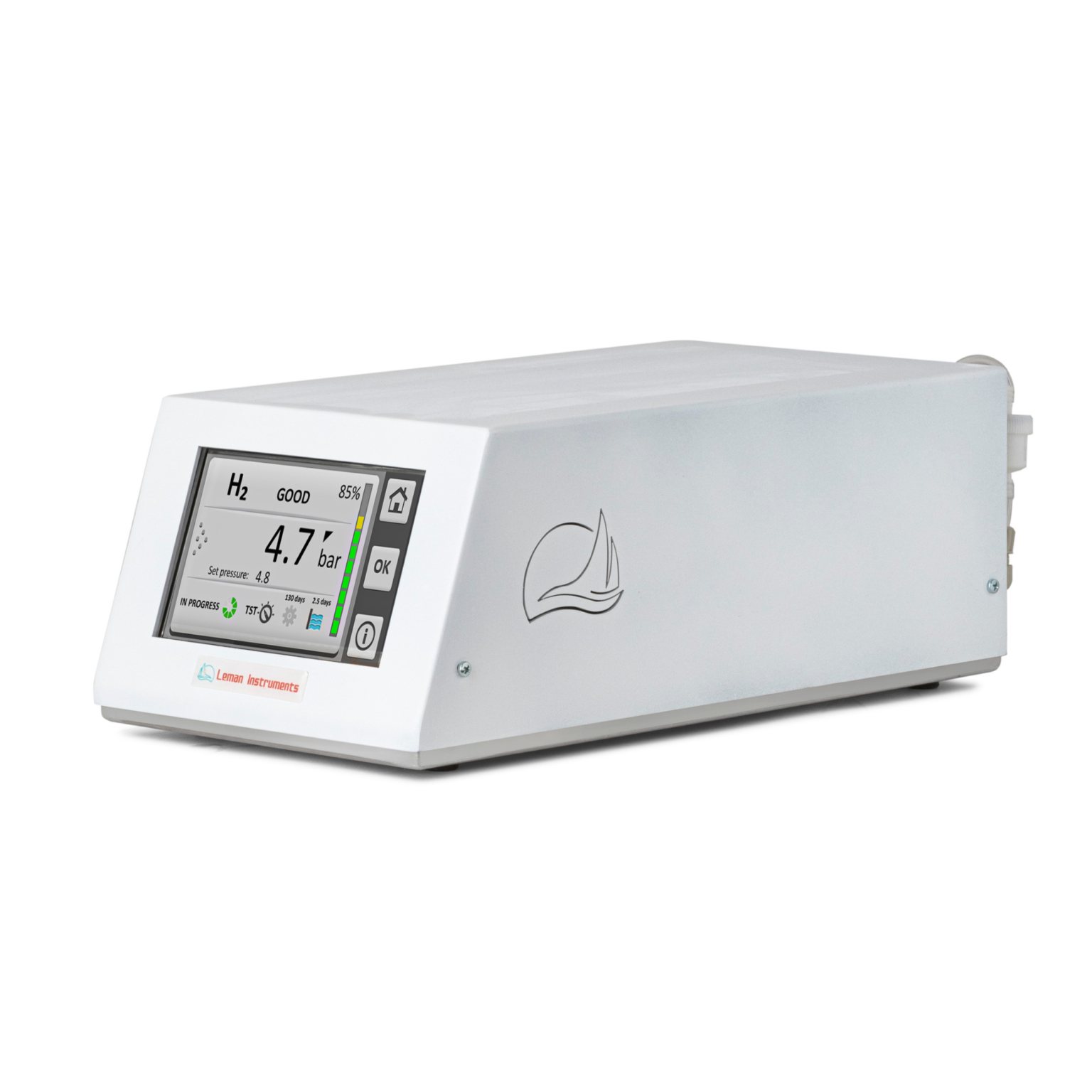 Lead product lineHYDROHydrogen, three PEM purity gradesH2
Carrier and calibration gas for the water-chemistry instruments that verify dissolved hydrogen and oxygen. The reactor's own feedwater injection runs at an industrial scale outside the HYDRO range.
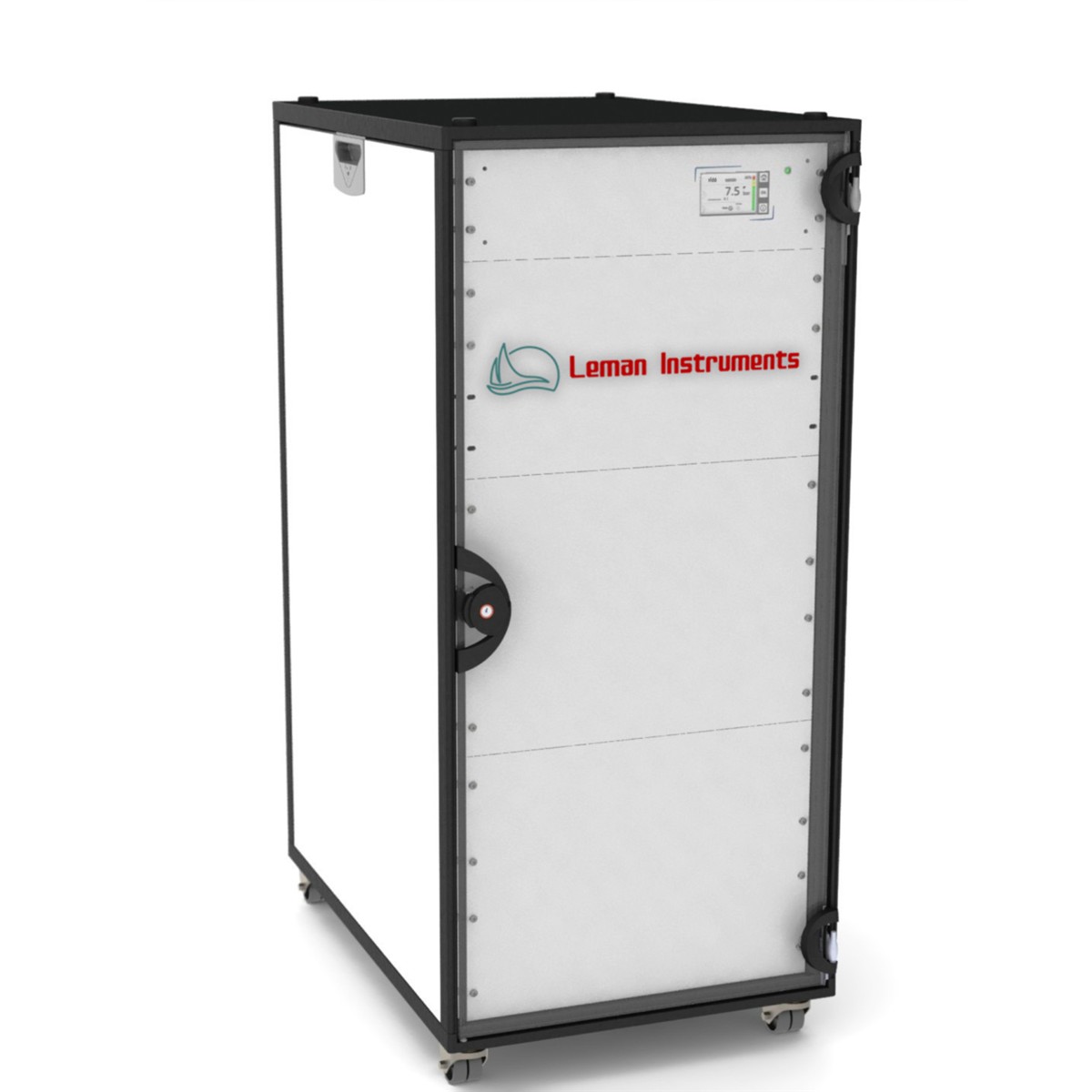 DIHYDRODeuterium from heavy waterD2
Isotope reference standards and heavy-water research chemistry, and deuterium-labelled work at national research laboratories.
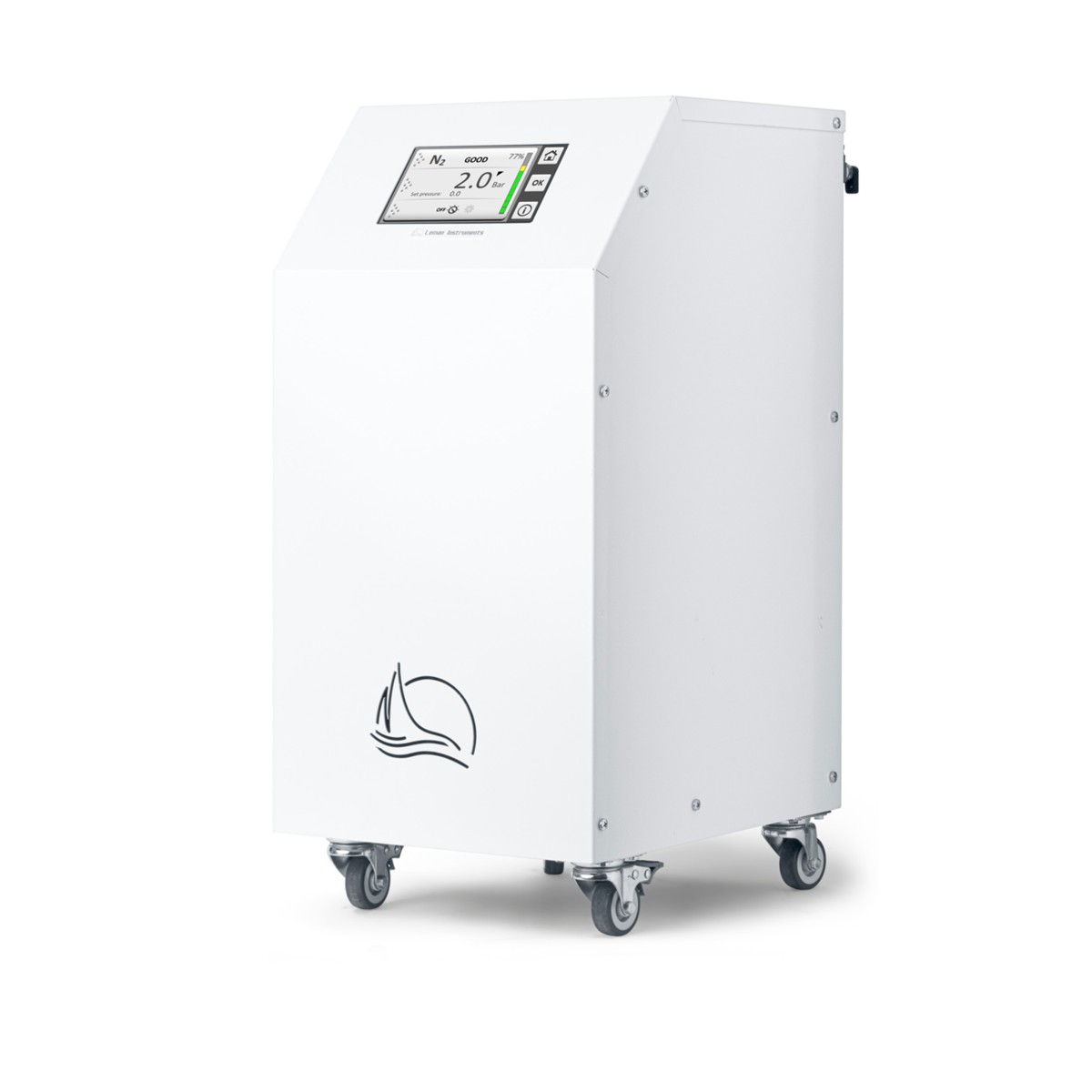 NITRONitrogen, 99 % to 99.99995 %N2
Nitrogen for laboratory GC and purge duties.
In depth
Hydrogen water chemistry
Radiation splits reactor water into oxidising species that drive stress-corrosion cracking. Adding hydrogen suppresses them, bringing oxygen down to the ppb range. The plant chemistry lab verifies the result every shift with instruments that need carrier and calibration gas — the duty a HYDRO serves; the reactor's own injection system is a separate, industrial-scale plant.
Deuterium from heavy water
In heavy-water reactors and isotope labs, deuterium gas is needed for reference standards and research. DIHYDRO electrolyses D₂O into D₂, with chemical purity above 99.9995 % and isotopic purity set by the heavy water supplied.
On the bench
Application by application: the equipment you will find, the gas it needs and the Leman generator that makes it.
| Application | Equipment | Gas it needs | Leman generator |
|---|---|---|---|
| Reactor water-chemistry monitoring | Plant chemistry laboratory instruments | Carrier and calibration gas | HYDRO50 L |
| Heavy-water reactor chemistry | Pressurised heavy-water reactor (PHWR) chemistry | Isotope reference standards | DIHYDRO50 LDIHYDRO50 LS |
| National laboratory isotope research | Detector and physics laboratories | Deuterated materials | DIHYDRO50 LS2 |
Instruments we know
From our compatibility lists: each family with its gases and the Leman generators that run it.
Laboratory GC and dissolved gases
Leman generatorsGCSTATION NEO · NANO TOWER · NANO N2 · HYDRO50 L
78 instruments in our compatibility listsQuestions we hear
Straight answers to what labs ask us first.
Nuclear qualification takes time.
It does, and we plan for it: start with the chemistry lab and the isotope group, with full documentation for your qualification process.
Other industries
Your methods and procedures set the gas specifications; a Leman engineer confirms flows, pressures and purities before quotation.