
Applications · By industry
Hydrogen economy. Clean feed for every test stand.
Every fuel cell and electrolyser is characterised on a test stand that needs clean, stable hydrogen. Parts-per-million contamination poisons the platinum catalyst — and invalidates the test.
What this industry needs
Fuel-cell and electrolyser test stands need a continuous, contamination-free hydrogen feed, from single cells to stacks, plus nitrogen to purge and inert around the rig.
It is a young sector with no legacy cylinder infrastructure.
How it works
From the sample or the process to the result, and the gas used at each step.
Membranes, catalysts and plates are assembled into single cells or stacks.
The cell is broken in under hydrogen and air, then purged with nitrogen.
Polarisation curves and durability runs draw hydrogen continuously, for days.
Results are compared run to run; any impurity in the feed shows up as degradation.
Where Leman fits
The Leman product lines this industry uses, and what each one does.
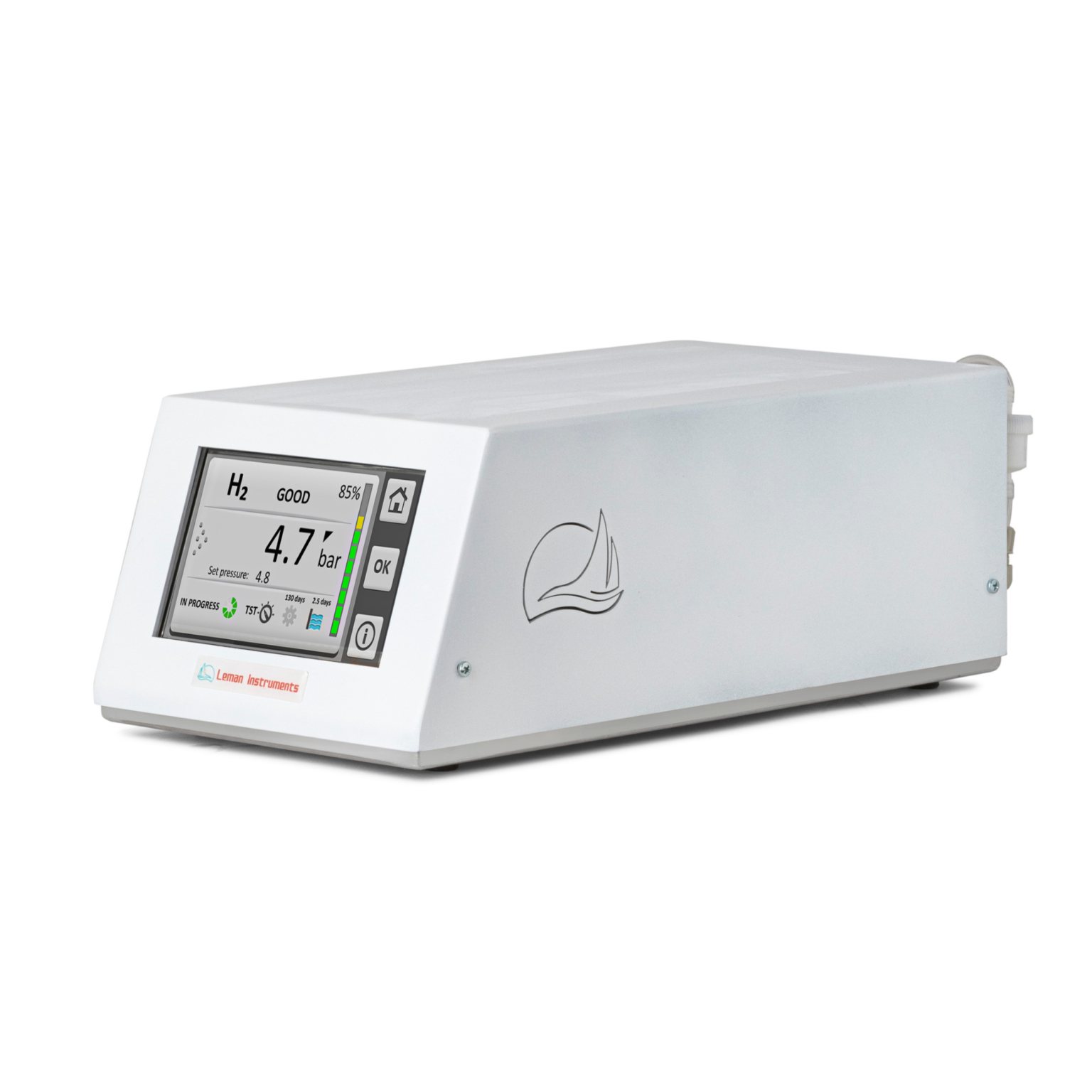 Lead product lineHYDROHydrogen, three PEM purity gradesH2
The primary fit: HYDRO65 LS2 and HYDRO70 for fuel-cell and electrolyser test-stand duty.
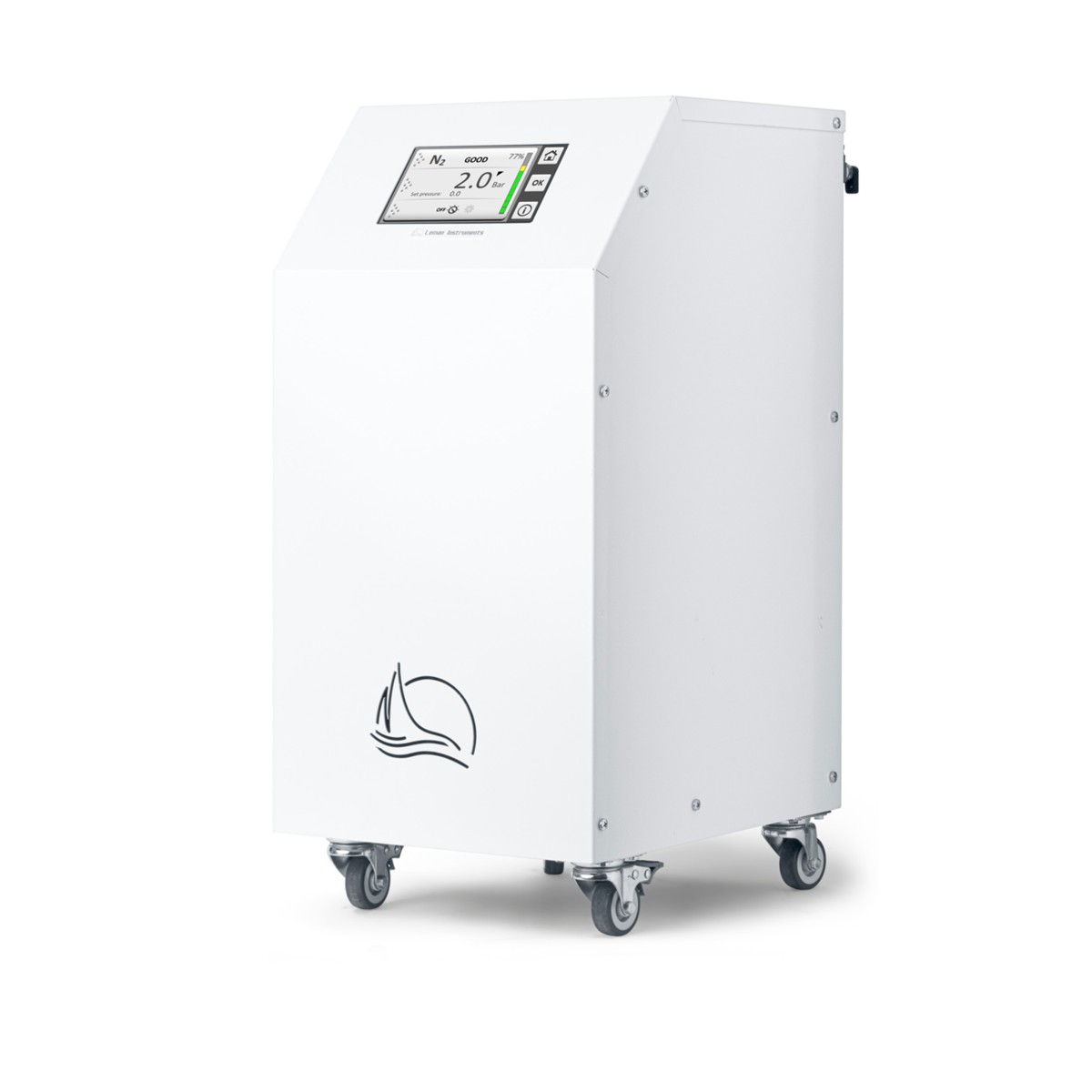 NITRONitrogen, 99 % to 99.99995 %N2
Nitrogen purge and inerting around the test rig.
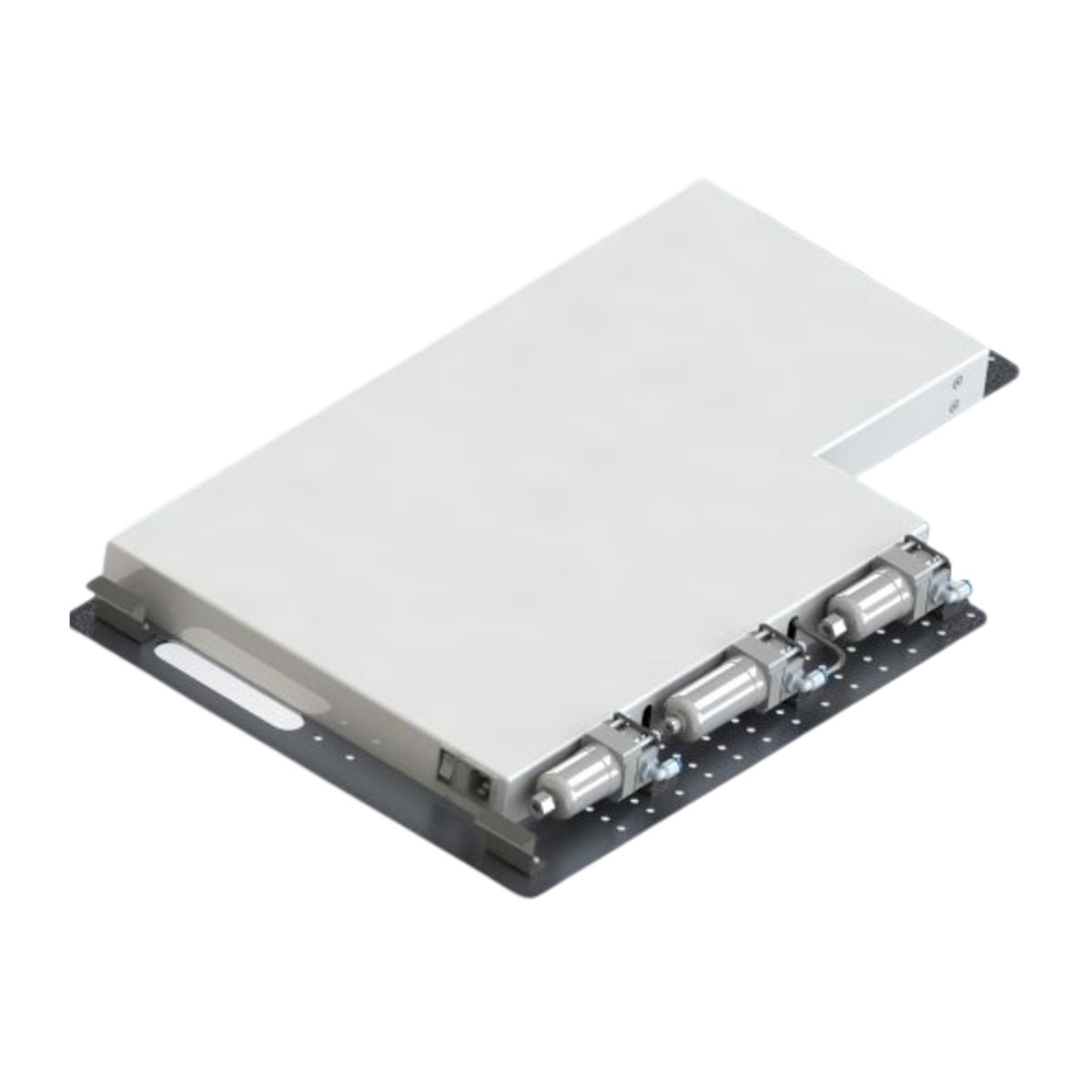 SLIM45 mm wall and OEM generatorsN2Air
A wall-mounted nitrogen source built into a test cell.
In depth
Catalyst poisoning
Platinum catalysts are poisoned by carbon monoxide and sulfur at ppm level. Hydrogen from a reformer or a contaminated cylinder can make a good cell look bad. Hydrogen from water electrolysis, as in a HYDRO generator, contains no CO or sulfur.
Flows matched to the test stand
Single cells draw around one litre per minute; stacks draw more. The HYDRO range covers 1 to 15 L/min continuously, so the generator is sized to the stand rather than to a delivery schedule.
On the bench
Application by application: the equipment you will find, the gas it needs and the Leman generator that makes it.
| Application | Equipment | Gas it needs | Leman generator |
|---|---|---|---|
| Single-cell fuel-cell testing | Single-cell test stands | 1–15 L/min H₂, contamination-free | HYDRO65 LS2 |
| Stack test benches | Higher-flow test stands | Continuous H₂, CO and sulfur free | HYDRO70 LS2 |
| Electrolyser R&D and QC | Electrolyser test benches | Clean H₂ reference feed | HYDRO65 LS2HYDRO70 L |
| Purge and inerting | Any test-stand installation | N₂ purge gas | NITRO50 LWSN2 |
Instruments we know
From our compatibility lists: each family with its gases and the Leman generators that run it.
Fuel cells and catalysts
Leman generatorsHYDRO50 L · DIHYDRO50 L · NANO COMP
7 instruments in our compatibility listsIs the sector too new for Leman to understand it?
The HYDRO flow range, 1 to 15 L/min, was specified for exactly this duty. Start from your test-stand flow and purity.
Can hydrogen purity affect our results?
Yes: contamination at ppm level poisons the catalyst. Electrolytic hydrogen from a HYDRO contains no CO or sulfur.
Other industries
Your methods and procedures set the gas specifications; a Leman engineer confirms flows, pressures and purities before quotation.